 Chat on WhatsApp

 Call Now


How to Properly Assess Your Backup Drainage System Before the Rainy Season
26 Oct 2026| By admin
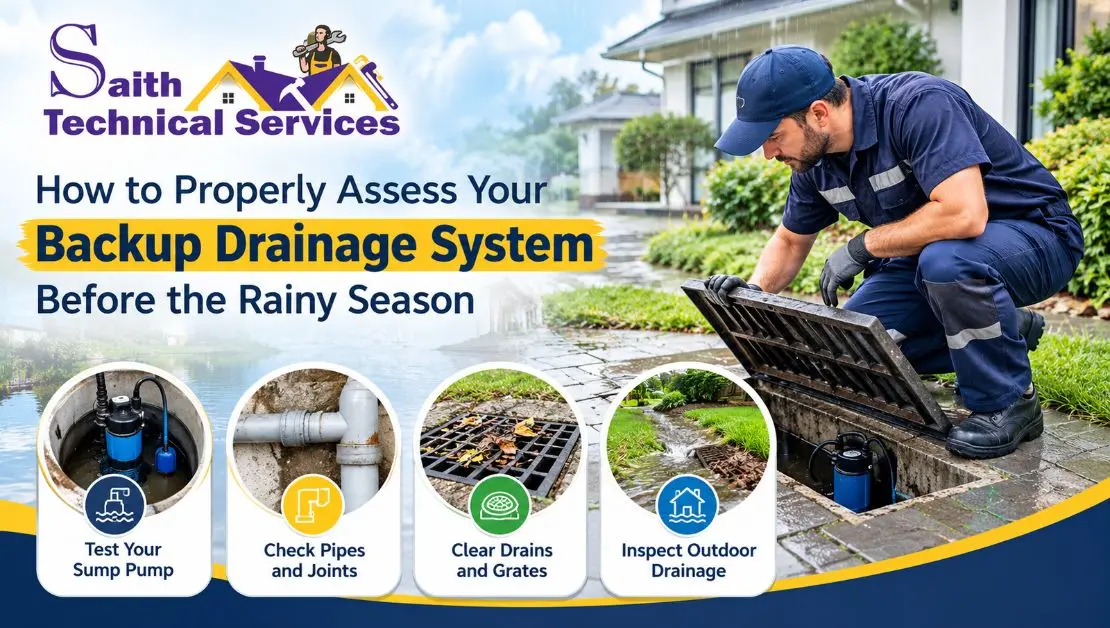
Rain comes unexpectedly, and water finds its way to the lowest level. Backup drains lie dormant, waiting for their time to be put into good use. When they fail, water fills basements, warps floorboards, and calls for immediate repairs. Homeowners wait for the rains to start before giving their drains any thought. It is at that time they begin to panic and require emergency water pump repair services.
Drainage system inspection does not require much time, but it needs to be done correctly. First, you should look at the condition of the pumps, pipes, and valves. Test the system using water to make sure that everything works properly. Remove any trash from the grates and channels. This manual will help you perform these actions. Regular inspections will keep your drainage system in working order during the rainy season.
Various Ways to Properly Assess Your Backup Drainage System Before the Rainy Season
Backup drainage is important to avoid waterlogging in your house when it rains. If the drainage is clogged or the pipes are broken, you will not be able to use the drainage. It is therefore important to check the drainage before the rainy season starts.
• Inspect your backup drainage system for visible damage
Begin with a visual inspection. Look at the pipes, drains, joints, and other open connections in the house. Look for evidence of cracking, faulty or loose fittings, rusting, or leaking water coming out of the house. For example, even a small crack in the drain pipe may not matter much under normal circumstances. However, during a rainy season, when more water enters the pipe system, the crack will lead to leakage in places where it is not supposed to leak. The best way to begin an emergency home maintenance routine is to fix these easily visible problems first.
• Test your sump pump before heavy rain
If there is a sump pump installed in your house, test it out before the rainy season comes. Pour water into the sump pit according to the instructions from the manufacturer. The float switch should be able to turn on automatically at a certain water level, while the pump will stop once the water level drops below a certain point. Take note of whether there are unusual noises coming from the equipment.
• Examine drainage pipes for leaks and loose joints
Look for wet areas on the exposed drainpipes. This could be seen in the form of water marks, loose joints, and soil erosion. The areas of the pipe where there are joints should also be looked at since the joints tend to deteriorate over time. Leaks should be fixed before any heavy rainfall, because they can cause problems with the foundations of the building.
• Check outdoor drains and yard drainage
Examine your garden for standing water after any rainstorm, especially in low areas that accumulate water. If there is any standing water, it is a sign that your drains may be clogged or that the grade is too flat. Make sure there is no obstruction in the drain covers, and that the grate is in good condition. It is important to see if the water is flowing away from your home.
Conclusion
Checking your backup drainage system prior to the arrival of rain is far from being difficult. The first thing to do is inspect open pipes, clear the drains, test the sump pump, and ensure that water flows out of the building. It will be helpful to pay attention to warning signs beforehand.

 Home
 Services

 Contact
 About